
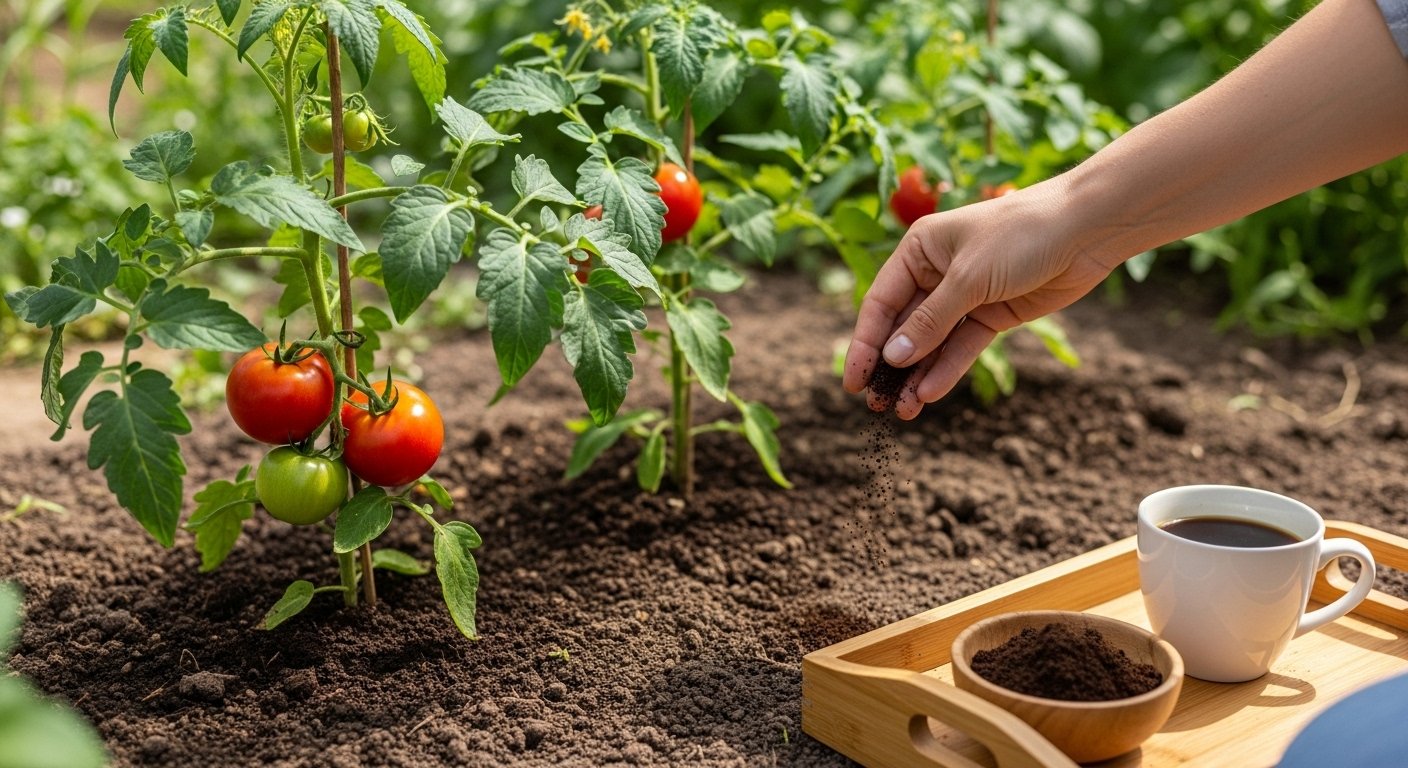
If you’re growing tomatoes and wondering whether your morning brew can power up your garden, you’re not alone. Many gardeners ask: “Can I use coffee grounds for tomato plants?” The answer is: yes — but with caveats. In this article we’ll explore how coffee grounds can help tomato growth, what the risks are, and exactly how to use them for best results. By the end you’ll know whether coffee grounds deserve a spot in your tomato-bed and how to apply them safely.
What Do Tomato Plants Need?
Before diving into coffee grounds, let’s recap what tomato plants (Tomato plants) require for the best growth.
Soil pH & structure
Tomatoes favour a slightly acidic to near-neutral soil pH, ideally around 6.0 to 6.8. Good drainage, organic matter and air in the soil are also crucial.
Nutrients: N, P, K and more
Tomatoes are heavy feeders: they need nitrogen for foliage, phosphorus for root/flower and fruit development, potassium for overall vigor and fruit quality. They also benefit from micronutrients such as calcium, iron, magnesium.
Moisture, air and microbial life
Tomatoes need consistent moisture, good airflow around roots, and a healthy soil microbial ecosystem. Improving soil structure and adding organic matter helps sustain this.
Understanding these basics helps us assess whether coffee grounds fit into the mix.
Explore More Topic: True Colors Training
What Are Coffee Grounds?
Used coffee grounds are what remains after brewing coffee. They are considered a kitchen & garden waste item, but many gardeners use them for soil amendment. According to sources:
-
They contain roughly ~2 % nitrogen and trace phosphorus/potassium.
-
They are rich in organic matter and can support beneficial soil microbes and earthworms.
-
Their pH once used is often close to neutral or mildly acidic, rather than highly acidic.
In short: coffee grounds aren’t magic fertilizer, but they have useful qualities when used correctly.
Potential Benefits of Coffee Grounds for Tomato Plants
Let’s be specific: how can coffee grounds help tomato plants?
Nutrient boost (slow-release)
Used grounds contain nitrogen and trace nutrients. For example, one article notes: “coffee grounds contain nitrogen, phosphorus and potassium …”
Organic matter & soil improvement
Adding coffee grounds increases the organic matter in soil, which can improve structure, water-retention and root-microbe interactions.
Suitable pH for tomatoes?
Since tomato plants like slightly acidic soil, the mild acidity or near-neutral pH of used coffee grounds can fit into that range (6.0-6.8) without major disruption.
Part of a composting strategy
Coffee grounds are particularly useful when incorporated into compost. They become part of a balanced organic amendment to use around tomato plants.
The Risks and Limitations
Important: coffee grounds are not a free pass to skip proper fertilizing or soil-care. Let’s review common pitfalls.
Low nutrient concentration
According to one source: “coffee grounds contain about 2 % nitrogen and trace amounts of phosphorus/potassium … tomatoes are fast-growing, nutrient hungry plants.” Epic Gardening So, relying solely on coffee grounds will likely leave nutrient gaps.
Possible soil structure problems when over-applied
Fresh grounds used as mulch/top-dressing can compact, form a resistant layer, reduce water/air flow and even inhibit seed germination.
pH and chemical effects
While a bit acidic or neutral, strong application can still alter soil pH. Some studies suggest caffeine residues may suppress root growth/seed germination in sensitive plants.
Not a substitute for balanced fertilizer
Using coffee grounds doesn’t replace the need for a well-balanced fertilizer regime for tomatoes. As one source states: “coffee grounds alone will not provide all the required nutrients …”
How to Use Coffee Grounds for Tomato Plants — Best Practices
If you choose to use coffee grounds in your tomato garden, here’s a step-by-step for safe, effective use.
Step 1: Collect and prepare the grounds
-
Use used coffee grounds (brewed) not fresh coffee grounds directly from the bean. Fresh grounds may be more acidic/have stronger compounds.
-
Let them cool/dry if still warm from brewing.
Step 2: Decide whether to compost or apply directly
Option A – Compost: Add coffee grounds (as a “green” ingredient) to your compost pile. Limit to ~10-20% of total volume. Once composted, it becomes safe and beneficial around tomato plants.
Option B – Direct Soil Amendment (with caution): If you apply directly:
-
Mix a thin layer (e.g., ½-inch) of cool coffee grounds into the top 2-3 inches of soil around the base of established tomato plants.
-
Do not apply a thick mulch of pure grounds (can compact).
Step 3: Timing & frequency
-
Best applied before planting or as part of bed preparation.
-
Avoid heavy application during fruiting/flowering when plants demand balanced nutrients. Some sources recommend at most once per season.
Step 4: Monitor soil pH & plant response
-
Check soil pH periodically to ensure it remains in the 6.0-6.8 zone.
-
Watch for signs of nutrient imbalance: yellow leaves, slow growth, weak fruiting.
Step 5: Combine with proper fertilisation
-
Use coffee-ground amendment in addition to (not instead of) a balanced tomato fertilizer (NPK).
-
For example, apply a tomato-specific fertilizer at planting and again as fruit sets.
Step 6: Use in containers vs garden beds
-
For container tomatoes: mix composted coffee grounds into potting mix or top dress lightly. Avoid heavy pure-ground mulches that could impact drainage.
-
For garden beds: apply into soil or compost first, not as a thick mulch around plants.
Practical Tips for Gardeners
Tip: Use other kitchen scraps too
Coffee grounds work well in a compost mix alongside leaves, grass clippings, vegetable scraps and eggshells (for calcium) for a richer amendment.
Tip: Worms and microbes love it
Adding coffee grounds into compost helps attract earthworms and beneficial microbes, improving soil life.
Tip: Don’t rely on grounds for pest control
Despite common claims, coffee grounds are not a reliable method to repel slugs/pests around tomatoes.
Tip: Soil mix matters
If you have heavy clay or sandy soils, mixing coffee-ground-rich compost can improve texture, drainage and water-holding capacity.
Real-World Scenarios: When It Works & When It Doesn’t
Scenario A: Raised-bed garden in sandy soil
You have sandy soil (fast drainage) and you prepare the bed for tomatoes. You mix in 1 cup of cooled used coffee grounds into the top 3 inches of soil and also add compost. Since your soil was light and low in organic matter, the coffee grounds help build structure and organic matter. Results: healthier root zone, good moisture retention.
Scenario B: Container tomatoes with heavy ground application
You have tomato in a pot and you decide to dump a half-bucket of used coffee grounds on top as mulch. Over time the layer compacts, water struggles to penetrate, roots suffer. Outcome: soil stays too wet at surface, air exchange reduced — yield suffers.
Scenario C: Using too much coffee grounds instead of fertilizer
You skip proper fertiliser and rely on grounds only. Tomatoes germinate but foliage becomes lush, fruit set is poor (due to nitrogen imbalance), or the plants quickly yo-yo. Outcome: insufficient balanced nutrients, delayed fruiting.
These scenarios show how important context and moderation are.
Conclusion
If you’re brewing that morning cup and thinking of saving the grounds for your tomato patch — go ahead. Just do it smartly. Use the grounds as part of your organic amendment strategy, mix them into soil or compost, and always keep in mind the bigger picture: soil pH, nutrient balance, moisture, drainage and microbial life. The keyword “coffee grounds for tomato plants” is not just a clever hack — it’s a tool, when used well. With moderation, observation and a proper fertiliser regimen, your tomatoes can thrive.
Happy gardening — and may your tomato harvest be juicy and abundant!
FAQs About Using Coffee Grounds for Tomato Plants
1. Can I put coffee grounds directly around tomato plants?
Yes, but only in moderation. It’s best to mix a small amount of used coffee grounds into the top layer of soil rather than spreading a thick layer on top. Too much coffee ground can compact the soil, blocking air and water from reaching the roots.
2. Do coffee grounds change the soil pH for tomato plants?
Used coffee grounds are only mildly acidic or even close to neutral. They won’t drastically change the soil’s pH, but if your soil is already acidic, adding too much could make it slightly more so. It’s a good idea to check your soil pH every few weeks during the growing season.
3. How often should I use coffee grounds for my tomato plants?
Once per season is enough. You can add composted or lightly mixed coffee grounds before planting or early in the growing season. Avoid using coffee grounds too frequently — tomatoes need a balanced mix of nutrients from other fertilizers as well.
4. Are coffee grounds a replacement for fertilizer?
No, coffee grounds are not a complete fertilizer. They contain small amounts of nitrogen, phosphorus, and potassium, but not enough for heavy feeders like tomatoes. Use them as a supplement along with a proper tomato fertilizer for best results.
5. Do coffee grounds repel pests around tomato plants?
Not really. Some people believe coffee grounds keep slugs or insects away, but there’s little scientific proof of that. It’s better to use tested pest-control methods while using coffee grounds only for soil improvement.